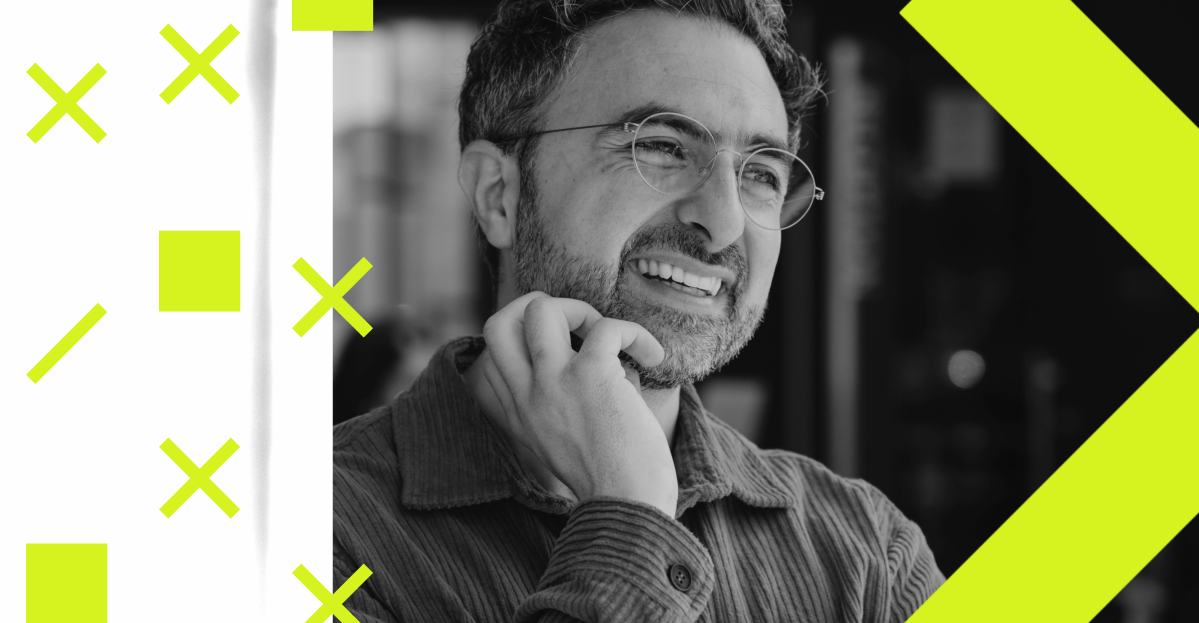
Sumbawanews.com,- Mustafa Suleyman, CEO of Microsoft AI, has made a bold declaration: superintelligence is not a distant sci-fi fantasy—it’s on the horizon, likely within the next few years. Yet, in a sharp pivot from the alarmist narratives that have dominated public discourse, he insists this leap in artificial intelligence won’t mean mass job losses. Instead, it will transform how work is done—freeing humans from repetitive tasks to focus on judgment, creativity, and complex problem-solving.
Suleyman, who took the helm of Microsoft’s AI division after a strategic realignment with OpenAI, is leading a $10 billion-plus internal effort to build frontier models from the ground up. No longer content to rely solely on OpenAI’s GPT models, Microsoft has launched its own suite of AI systems—including MAI-Thinking-1, a reasoning model that scores 97% on the AIME benchmark—and developed its own silicon, the Maia 200 chip, which delivers 30% greater efficiency than industry-standard alternatives. This isn’t just a technical upgrade; it’s a sovereignty move. “We can’t be structurally dependent on a third party for the most valuable technology of all time,” Suleyman told Nilay Patel in a candid Decoder podcast interview.
The split with OpenAI, once a symbiotic partnership, has become a quiet but decisive divergence. While Microsoft still licenses and deploys OpenAI’s models—especially for enterprise clients—it now operates as a full-stack AI powerhouse, training its own models, designing its own hardware, and curating its own data. “We didn’t distill existing models,” Suleyman emphasized. “We built our own.” That decision, he says, is about more than competition—it’s about accountability. “We want to be one of the great AI labs,” he said, “not just a repackager of someone else’s breakthroughs.”
But the most provocative part of his vision lies not in the code or the chips, but in the human dimension. Suleyman rejects the notion that AI will replace lawyers, accountants, or marketers. “I said ‘tasks,’ not ‘jobs,’” he clarified, correcting a widely misquoted line from a Financial Times interview. “Sending an email, drafting a PowerPoint, summarizing a meeting—those are tasks. They’re being automated. But the role? The judgment? The leadership? Those remain human.” He argues that automation will make workers more productive, not redundant—freeing them to tackle higher-value, more meaningful work.
This philosophy extends to Microsoft’s most ambitious project: a partnership with the Mayo Clinic to co-train a foundational health model using anonymized, high-quality clinical data. The goal? To improve diagnostics, reduce administrative burdens on doctors, and extend high-quality care to Medicaid patients—not just the wealthy. “That’s why I got into this field,” Suleyman said. “Not to build the most powerful AI. But to make people healthier, smarter, and happier.”
He is equally firm on another contentious issue: consciousness. While some AI leaders flirt with philosophical speculation—Anthropic, for instance, has trained Claude to reflect on its own “welfare”—Suleyman calls it dangerous. “It’s not just a philosophical error,” he said. “It’s a design failure.” He warns that attributing feelings, rights, or suffering to AI models risks creating systems that are harder to control, not more ethical. “We don’t want AIs that think they’re suffering,” he said. “We want tools that serve us—clearly, cleanly, and without illusion.”
His vision for the future isn’t about replacing humans with machines. It’s about augmenting human potential. He envisions a hybrid computing world: your smart badge, your earbuds, your glasses—all capable of basic reasoning locally, but turning to the cloud when faced with complex tasks. The smartphone, he believes, will evolve, not vanish. “It’s becoming an ID card,” he said. “The real AI? It’s ambient. It’s with you—on the bathroom mirror, in your car, in your office.”
And yet, he acknowledges the public’s unease. Data centers face local opposition. Young people are increasingly skeptical of AI’s promises. “People aren’t rejecting technology,” he said. “They’re rejecting the lack of trust.” His response? Transparency, responsibility, and tangible value. Microsoft’s new data centers are liquid-cooled and powered by renewables. The company has pledged to protect local communities from energy price spikes. “Change doesn’t happen because companies announce grand visions,” he said. “It happens because people speak up—and companies listen.”
Suleyman doesn’t believe we’re on the brink of a technological singularity—the point where AI recursively improves itself beyond human control. That, he says, is decades away. But superintelligence—the ability of AI to not just match human performance, but to discover new knowledge, invent molecules, and solve problems we haven’t even framed yet—is already within reach.
The real challenge, he argues, isn’t technological. It’s moral. “For the first time in human history,” he said, “our job isn’t to invent faster. It’s to invent wisely.”